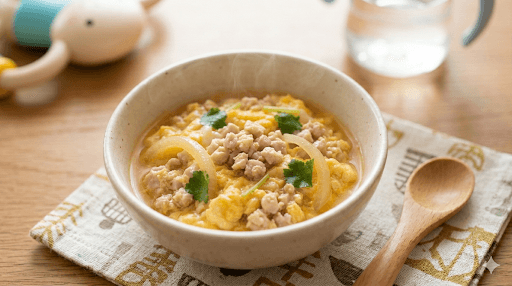
Oyako-ni (Parent-Child Simmered Chicken & Egg)
Allergen Information
Oyakodon (parent-and-child rice bowl) is one of Japan's most beloved comfort foods. This baby-adapted version - oyako-ni (simmered, without the 'don' rice bowl aspect) - introduces toddlers to the flavors they will enjoy for a lifetime. The name comes from the poetic pairing of chicken (parent) and egg (child). By 12 months, Japanese babies are eating increasingly close to the family meal, and oyako-ni bridges that gap beautifully. The egg is cooked fully through for food safety, the chicken is cut small and tender, and the seasoning is mild but flavorful.
A baby-friendly version of the classic oyakodon - tender chicken and softly set egg simmered in sweet dashi. Named 'parent and child' for the chicken and egg combination.
Ingredients
- 50g chicken thigh, cut into very small pieces (5mm cubes)
- 1 egg, well beaten
- 1/4 onion, thinly sliced
- 1/3 cup (80ml) dashi stock
- 1 teaspoon soy sauce
- 1 teaspoon mirin
- Cooked rice for serving
Ingredient Substitutions
Can't find Japanese ingredients? Here are alternatives available at most supermarkets.
- Chicken thigh → chicken breast (slightly drier but works well diced small)
- Mirin → 1/2 teaspoon sugar dissolved in 1 teaspoon water
- Soy sauce → tamari (for wheat-free soy sauce option)
- Dashi → low-sodium chicken broth
Instructions
- 01In a small pan, combine dashi stock, soy sauce, and mirin. Bring to a simmer.
- 02Add the sliced onion and cook until soft and translucent, about 3 minutes.
- 03Add the chicken pieces and cook until no longer pink, about 4-5 minutes.
- 04Pour the beaten egg evenly over the chicken and onion.
- 05Cover with a lid and cook on low heat for 3-4 minutes until egg is fully set (no runny egg for babies).
- 06Serve over a small portion of soft-cooked rice.
Tips from a Dietitian Mom
- Unlike adult oyakodon where the egg is kept soft, baby's egg MUST be fully cooked through.
- Cut chicken into very small pieces - 5mm cubes are ideal for this age.
- The mirin adds sweetness. If unavailable, a tiny pinch of sugar works as a substitute.
- This recipe is great for family meals - make the adult version alongside and simply use less seasoning for baby's portion.
Storage & Freezing
Refrigerate for up to 24 hours. Can be frozen without the egg for up to 2 weeks. Add a fresh egg when reheating for best texture.
Nutrition Facts
Per serving (approximate)
Frequently Asked Questions
- When can babies eat eggs?
- Japanese guidelines now recommend introducing well-cooked egg (starting with a tiny amount of hard-boiled egg yolk) from around 7-8 months. By 12 months, most babies can eat whole eggs. Always ensure eggs are fully cooked for food safety.
- Is mirin (sweet rice wine) safe for babies?
- Yes - the alcohol in mirin evaporates completely during cooking. What remains is a gentle sweetness. If you prefer, substitute with a tiny amount of sugar.
- Is it safe to give egg to my baby in this dish?
- Egg is introduced gradually in Japanese weaning - egg yolk first from around 7-8 months, then whole egg (including the white) once the yolk is well tolerated, usually from around 9-12 months. Because this oyako-ni uses whole beaten egg, make sure your baby has already accepted egg white before serving it, and always cook the egg through fully.
- What age is oyako-ni suitable for?
- This recipe suits the completion stage, around 12-18 months, when babies handle soft family-style foods. For a younger baby you can adapt it by using only well-cooked egg yolk and chopping the chicken very finely. Keep the seasoning minimal at every age.
Free Baby Food Starter Guide
Get our free PDF guide to starting solids the Japanese way, plus weekly recipes and nutrition tips for your little one.