Steamed Salmon and Broccoli with Dashi
Allergen Information
Fish is central to Japanese cuisine, and introducing it to babies is taken very seriously. Japanese pediatric guidelines recommend starting with mild white fish at 7-8 months, then progressing to richer fish like salmon around 9-11 months. Salmon (sake) is one of the most popular fish in Japan and its pink color and mild flavor make it appealing to babies. Steaming preserves the most nutrients and creates a soft, flaky texture perfect for developing chewers. The combination with broccoli - known as the 'tree vegetable' that Japanese kids learn to love early - makes this a nutritionally complete meal.
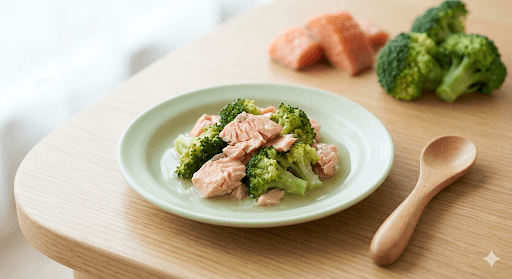
Flaky steamed salmon with tender broccoli in a gentle dashi sauce. This protein-rich meal introduces baby to the Japanese love of fresh fish in a safe, age-appropriate way.
Ingredients
- 40g fresh salmon fillet (boneless, skinless)
- 3-4 small broccoli florets
- 1/4 cup (60ml) dashi stock
- 1/4 teaspoon soy sauce (optional)
Ingredient Substitutions
Can't find Japanese ingredients? Here are alternatives available at most supermarkets.
- Salmon → cod, sea bass, or tilapia (any mild fish works)
- Broccoli → cauliflower, green beans, or zucchini
- Dashi → unsalted fish or vegetable broth
- Soy sauce → omit for a completely salt-free version
Instructions
- 01Check salmon carefully for any remaining bones. Run your fingers along the flesh.
- 02Steam the salmon and broccoli together for 8-10 minutes until salmon flakes easily and broccoli is very tender.
- 03Remove from steamer and let cool slightly.
- 04Flake the salmon into small pieces, checking once more for bones.
- 05Cut broccoli florets into tiny pieces appropriate for baby.
- 06Warm the dashi stock in a small pot, add a tiny drop of soy sauce if desired.
- 07Arrange salmon and broccoli in baby's bowl. Pour a little warm dashi over the top.
Tips from a Dietitian Mom
- ALWAYS check for bones carefully - run your fingers over the salmon multiple times.
- Wild salmon has more omega-3 than farmed, but either works well for babies.
- Broccoli stems are actually very tender when steamed long enough - peel and dice them for extra nutrition.
- As a dietitian, I love this recipe because salmon provides DHA for brain development and broccoli is rich in vitamin C for iron absorption.
Storage & Freezing
Refrigerate for up to 24 hours. Steamed fish can be frozen for up to 2 weeks, but texture may be slightly drier when thawed. Reheat thoroughly.
Master the Basics
Nutrition Facts
Per serving (approximate)
Frequently Asked Questions
- Is salmon safe for babies?
- Yes! Salmon is recommended for babies from around 9 months in Japanese guidelines. It is rich in DHA and omega-3 fatty acids crucial for brain development. Start with a small amount and ensure it is thoroughly cooked.
- How do I introduce allergens like fish safely?
- Japanese pediatricians recommend introducing one new food at a time, early in the day, starting with a small amount (1/2 teaspoon). Wait 2-3 days before introducing another new food. This way you can identify any allergic reactions clearly.
- Is salmon safe for babies, given concerns about mercury?
- Yes. Salmon is a low-mercury fish and one of the best choices for babies - it is rich in DHA omega-3 for brain development. It is the higher-mercury predatory fish (shark, swordfish, marlin, bigeye tuna) that should be avoided. See our guide on introducing fish to babies for the full list.
- How do I make sure there are no bones?
- Even fillets sold as boneless can retain small pin bones. After cooking, flake the salmon apart slowly with your fingers and run them through the flesh to feel for any bones before mashing. Removing the skin as well makes it easier to check and easier for your baby to eat.
Free Baby Food Starter Guide
Get our free PDF guide to starting solids the Japanese way, plus weekly recipes and nutrition tips for your little one.