
A Number That Surprised the World
In the United States, childhood obesity rates among children aged 2-19 years rose from 13.9% in 1999 to 21.1% by 2023. In the same period, Japan's childhood obesity rate increased by just 0.3% - the smallest increase of any OECD country.
Japan is not thin by accident.
Behind these numbers is a philosophy of food education called shokuiku - a word that combines shoku (food) with iku (to nurture or raise). It is the idea that how we eat, why we eat, and what we understand about food is just as important as the nutrients on the plate.
This philosophy is why I became a registered dietitian. And it is why I created JapanDish.
What Shokuiku Actually Means
Shokuiku is not a diet. It is not a set of food rules. It is an education.
In 2005, the Japanese government enacted the Basic Law on Shokuiku - making Japan one of the only countries in the world to enshrine food education in national legislation. The law defines seven core principles, which go far beyond calories and nutrients:
- Understanding the origins of food
- Appreciating the people who grow and prepare it
- Developing gratitude for the natural world
- Learning seasonal eating
- Connecting food to cultural identity and tradition
- Understanding the relationship between food and the environment
- Building habits of healthy eating that last a lifetime
Research published in peer-reviewed journals confirms that children who receive shokuiku education tend to have significantly better eating habits as adults - and that family conversations about food during elementary school years have an independently positive effect on nutritionally balanced eating behaviour throughout life.
In short: the earlier and more consistently children engage with food education, the more it shapes who they become as eaters.
The Four Pillars of Shokuiku
1. Gratitude (Kansha)
Before every meal in Japan, the word "itadakimasu" is spoken. It means, loosely, "I humbly receive." After eating: "gochisousama deshita" - "thank you for the feast."
These are not customs. They are a daily acknowledgment that food comes from living things, from the work of farmers, from the labour of cooks, from the systems of the natural world. Children learn this from the time they can speak.
2. Seasonality (Shun)
Japanese food culture is deeply organised around the seasons. Spring brings bamboo shoots and new tea. Summer brings edamame and cold noodles. Autumn brings matsutake mushrooms and persimmons. Winter brings root vegetables and warming hot pots.
Eating seasonally is not just about flavour in Japan - it is about connection to place and time. School lunches change with the seasons. Children learn the names of seasonal ingredients and understand where they come from. Food becomes a calendar.
3. Cultural Identity (Bunka)
In 2013, washoku - traditional Japanese cuisine - was inscribed on the UNESCO Intangible Cultural Heritage list. The characteristics that earned this recognition: balance, variety, natural flavour, and the deep relationship between food and the seasons.
Shokuiku transmits this culture deliberately. Through school lunches, cooking classes, farm visits, and classroom discussions, children learn that what they eat is part of who they are.
4. Balance (Baransu)
The Japanese approach to meal balance is elegantly simple: ichiju sansai - one soup, three sides. A bowl of rice, a soup (usually miso), one main protein dish, and two vegetable sides. This framework naturally produces variety and prevents any single food from dominating.
Every school lunch in Japan is built on this structure. Every nutrition teacher - including me - plans around it every month.
Why Shokuiku Matters Right Now
During my five years planning school lunches in Saitama, I watched children who arrived in first grade refusing vegetables gradually become students who asked what was in their miso soup and whether the fish was seasonal. That transformation doesn't happen by accident.
A nationwide study published in the Journal of Public Health found that school lunch coverage significantly decreased the percentage of childhood overweight and obesity in subsequent years.
Research analysing 2019 survey data found that people who received nutrition education at elementary and middle school tend to have a more positive attitude towards nutrition, and that family conversation about food during elementary school years has a positive effect on nutritionally balanced eating behaviour.
These findings are not surprising to anyone who has worked in a Japanese school. They confirm what nutrition teachers across Japan observe every single day: that food education, sustained over years, changes how people eat for life.
Shokuiku Is Not Perfect
It would be dishonest not to mention the tensions.
Some researchers note that the expectation that all children finish everything on their plate - a common practice in Japanese schools - can be counterproductive for children who struggle with certain foods or textures. The emphasis on conformity (everyone eating the same thing) leaves little room for individual preference.
Additionally, childhood obesity in Japan, though still low by international standards, has been rising again since the late 2010s - particularly among adolescents - linked to declining physical activity and, possibly, increasing processed food consumption.
No system is perfect. But the philosophy of shokuiku - that food is education, that eating is a practice to be learned with intention - remains one of the most coherent approaches to children's food that exists anywhere in the world.
What This Means for You
You do not need to move to Japan to practice shokuiku.
The principles are simple enough to apply anywhere:
Say something before you eat. Even a moment of acknowledgment - where this food came from, who made it - changes the experience of eating.
Eat seasonally when you can. Farmers markets, seasonal produce sections, growing one thing yourself. Seasonality connects food to the real world.
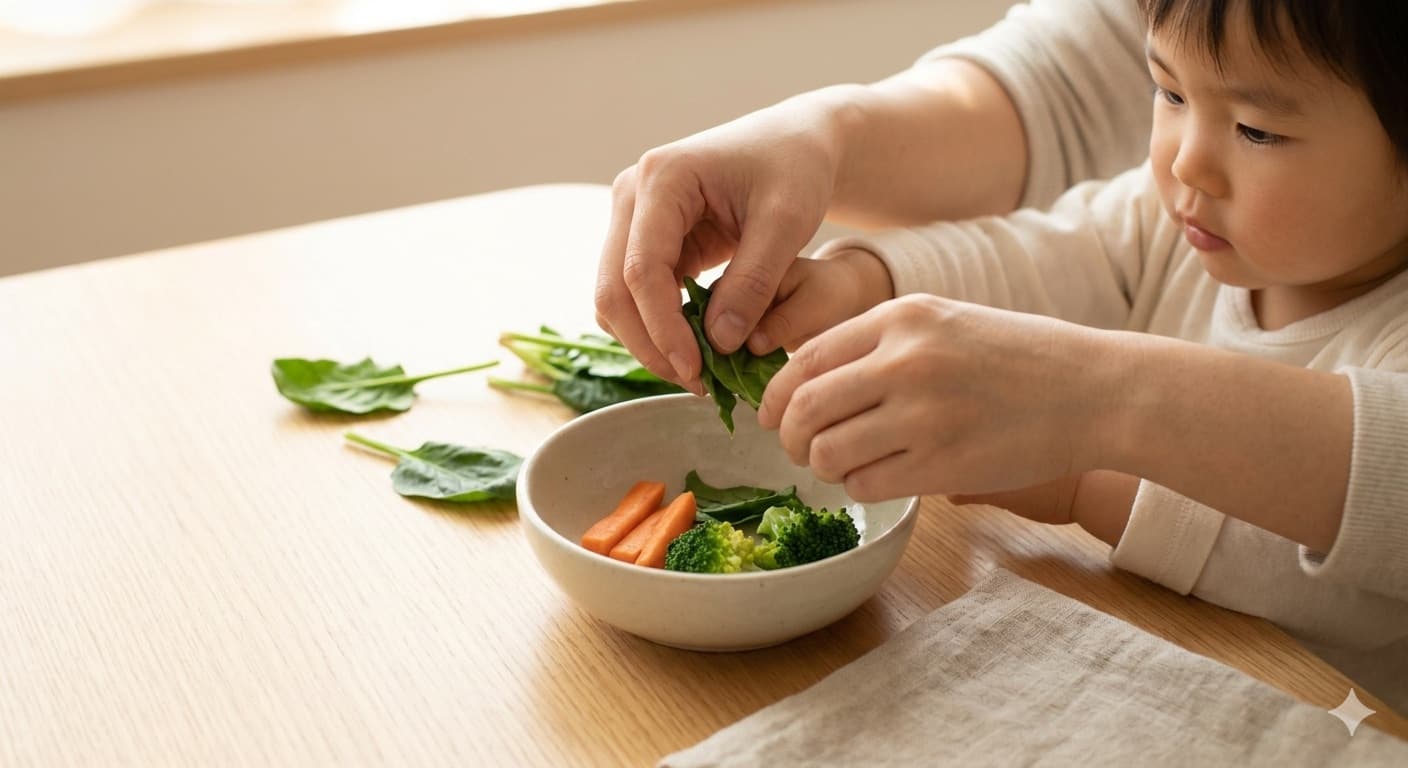
Teach children about food, not just rules about food. Not "eat your vegetables because they're good for you" - but "these carrots came from the ground, they taste sweeter in autumn, here's how we cook them."
Build variety through structure. The ichiju sansai framework works in any kitchen. One main, one soup, two sides. Simple. Balanced. Replicable.
These are not Japanese secrets. They are practices that Japan has preserved and formalised - and that the rest of the world is only now beginning to rediscover.
Next in This Series
- Kyushoku - How Japan's School Lunch System Puts Shokuiku into Practice
- Japanese Baby Food - Shokuiku Starts at the First Spoonful
Yumi is a registered dietitian and certified school nutrition teacher who spent five and a half years implementing shokuiku through school lunches at a Japanese elementary school. She now shares Japan's food philosophy with families around the world through JapanDish.
Sources:
- Basic Law on Shokuiku, Japan, 2005
- Miyoshi M. et al., "School-based Shokuiku program in Japan," Asia Pacific Journal of Clinical Nutrition, 2012
- Oxford Review of Education, "School food, sustainability, and interdependence: learning from Japan's Shokuiku," 2024
- Miyawaki A. et al., "Impact of the school lunch program on overweight and obesity," Journal of Public Health, 2019
- PMC: "Effects of Childhood Nutrition Education from School and Family on Eating Habits," 2022
- PMC: "A Multi-Level Approach to Childhood Obesity Prevention: Lessons from Japan and the United States," 2024