
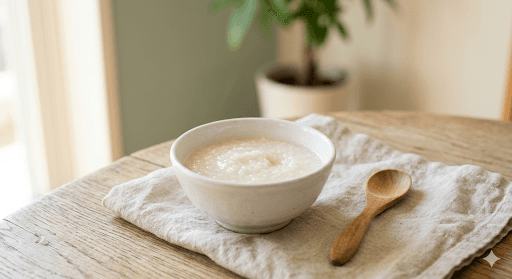
Even the Expert Was Confused
I had spent five and a half years planning school lunches for hundreds of children. I knew the Ministry of Health guidelines by heart. I had helped countless parents think through their children's nutrition.
And then my daughter turned five and a half months old, and I had absolutely no idea what I was doing.
The first spoonful of okayu went into her mouth. She made the most puzzled face I had ever seen - like she had just encountered something from another planet.
The first two weeks? She spat almost everything out.
Here's what I learned: knowing about food and actually feeding a baby for the first time are completely different things. I had never fed a baby before. I was a first-time mother, just like anyone else, figuring it out one messy spoonful at a time.
If you're feeling confused and overwhelmed right now - good. That means you're paying attention. It gets easier. I promise.
What Is Okayu?
Okayu is Japanese rice porridge - rice cooked slowly with a large amount of water until it becomes soft, smooth, and gentle on the stomach.
In Japan, okayu is the very first food babies eat. Not pureed vegetables, not baby cereal - rice. It makes complete sense when you think about it: rice is the foundation of Japanese food culture, and okayu is its softest, most digestible form.
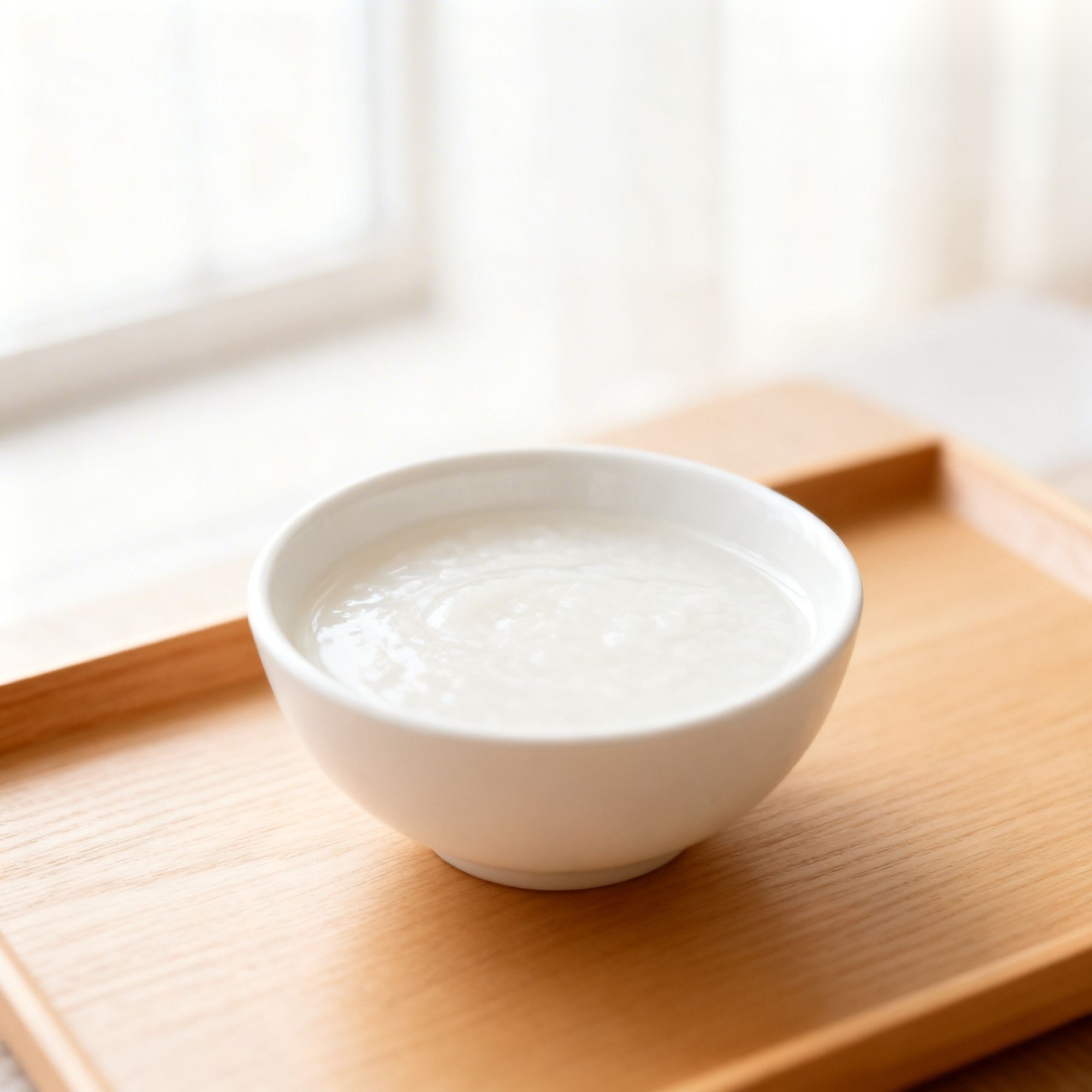
For Stage 1 babies (5-6 months), we make 10:1 okayu - one part rice to ten parts water. The result is almost liquid, silky smooth, and easy to swallow for babies who are just learning what food is.
What You Need
Ingredients
- 1 tablespoon uncooked Japanese short-grain rice
- 150ml (2/3 cup) water
Makes: 2-3 small servings Time: 30 minutes Stage: 1 (5-6 months)
How to Make It
1. Rinse the rice Place the rice in a small saucepan and rinse once with cold water. Drain.
2. Add water and bring to a boil Add 150ml of water. Bring to a gentle boil over medium heat.
3. Simmer low and slow Reduce the heat to the lowest setting. Cover with a lid slightly ajar and simmer for 25-30 minutes, stirring occasionally, until the rice is completely soft and the mixture is thick and creamy.
4. Blend or strain (Stage 1) For babies just starting solids, blend until completely smooth or press through a fine sieve. The texture should be almost liquid - thinner than you think.
5. Cool and serve Always check the temperature before feeding. It should feel comfortably warm on the inside of your wrist, not hot.
Yumi's Tips from the Feeding Table
On the puzzled face: When your baby makes a strange expression at the first bite, that's not rejection - it's curiosity. Their brain is processing an entirely new sensation. Keep going.
On spitting it out: Completely normal, especially in the first two weeks. Babies are learning to move food to the back of their mouth and swallow. It's a skill, not a preference.
On quantity: Start with just one small baby spoon - about 5ml. One spoon. That's it. Increase gradually over the following weeks.
On consistency: Japanese guidelines suggest starting once a day, at the same time each day, preferably in the morning. This way, if your baby has a reaction to a new food, you have the rest of the day to observe.
On freezing: Make a larger batch and freeze in ice cube trays. Each cube is roughly one portion. Defrost in the microwave with a small splash of water and stir well.
The Japanese Approach to Starting Solids
Japan's Ministry of Health guidelines divide weaning into four stages - and Stage 1 is intentionally slow and simple. Rice porridge only, for the first week or two. Then, one new ingredient at a time, always one at a time, so you can identify any reaction.
Okayu Through the Four Stages
As your baby grows, the texture of okayu gradually changes:
Stage 1 (5-6 months) - 10:1 ratio: Completely smooth, almost liquid. Blended or strained.
Stage 2 (7-8 months) - 7:1 ratio: Slightly thicker, with very soft rice grains just beginning to hold their shape.
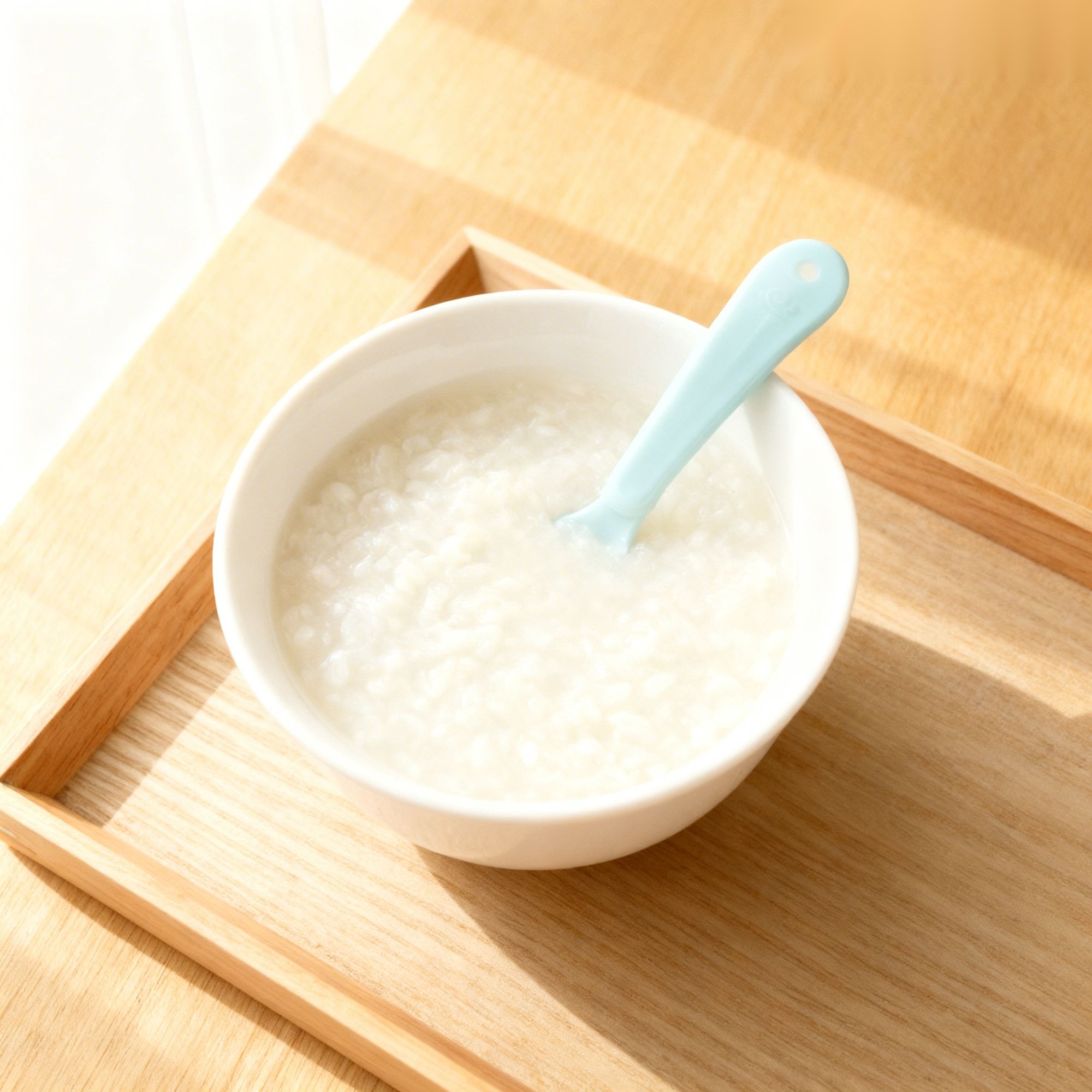
Stage 3 (9-11 months) - 5:1 ratio: Thicker porridge with visible, soft rice grains. Baby is learning to mash food with their gums.
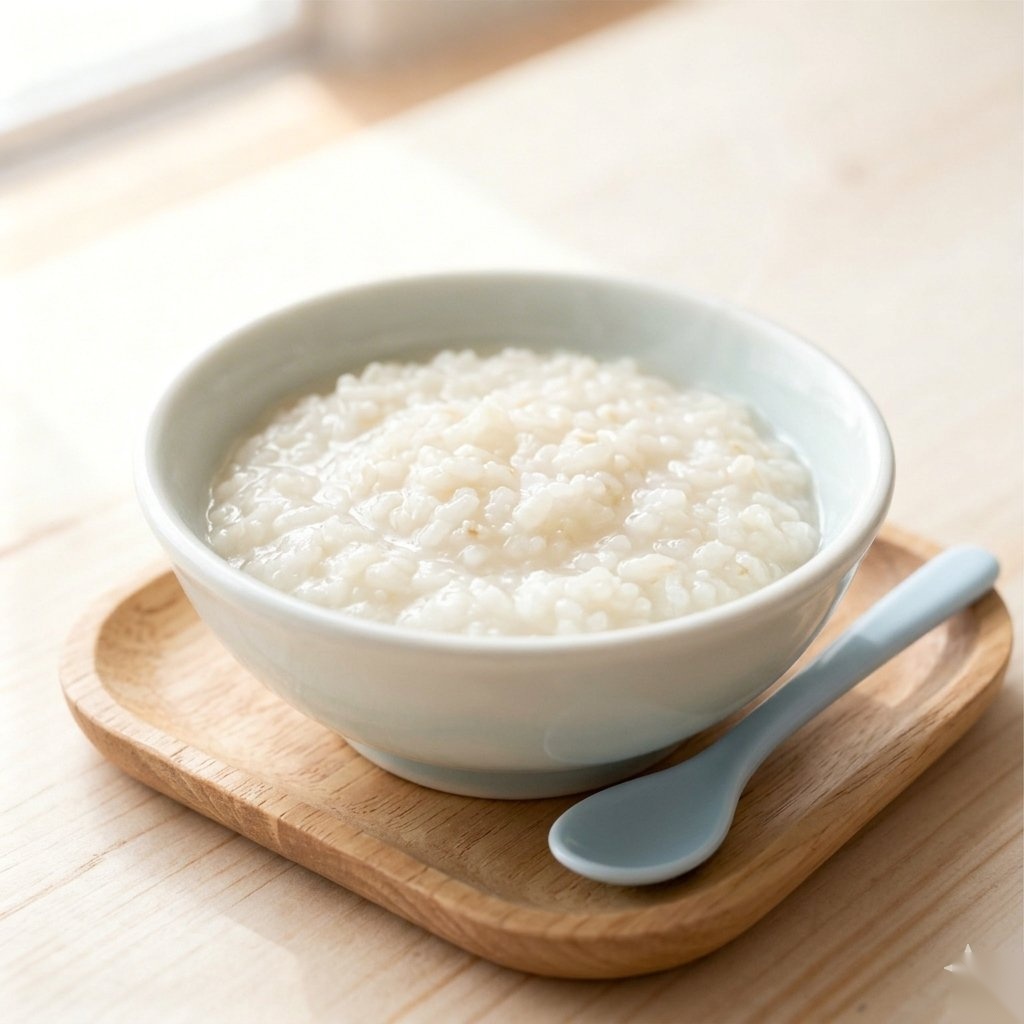
Stage 4 (12-18 months) - 2:1 ratio: Soft rice, close to adult texture. Baby can chew with emerging teeth.
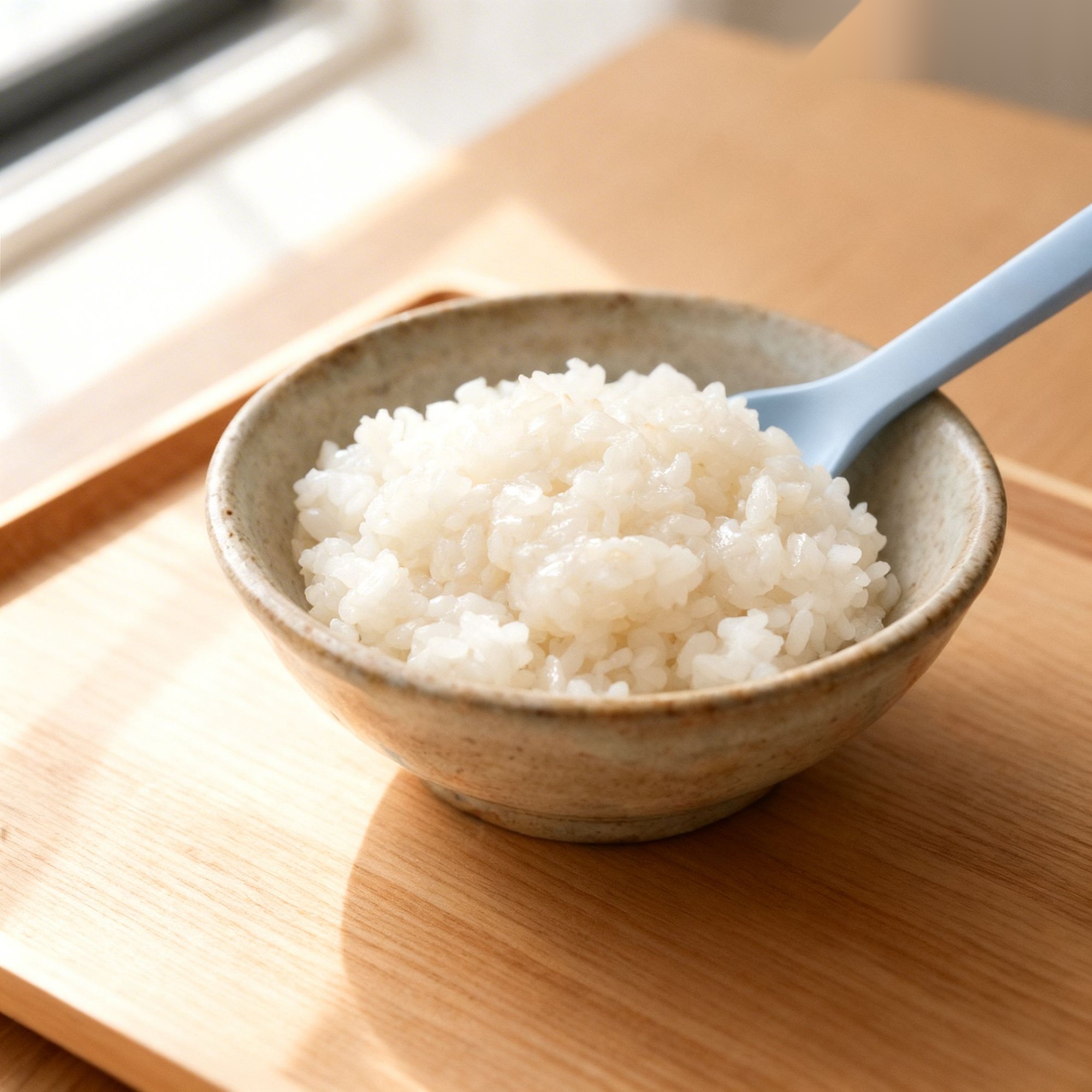
This is very different from the baby-led weaning approach popular in the West, where babies are offered finger foods from the start. Neither approach is wrong - but the Japanese method offers something particular: a chance to introduce flavours very gently, to build familiarity with real food textures gradually, and to notice exactly how your baby responds to each new ingredient.
My daughter spat out okayu for two weeks. Then one day, she swallowed. And then she opened her mouth for more.
That moment - after all the mess and confusion and doubt - is one I won't forget.
Next Steps
Once your baby is comfortable with plain okayu (usually after 1-2 weeks), you can begin introducing:
-
Strained vegetables mixed into the okayu
-
A few drops of baby kombu dashi for gentle umami
-
Soft tofu, mashed smooth
Yumi is a registered dietitian and certified school nutrition teacher. She is currently introducing her daughter to Japanese weaning foods, one spoonful at a time.