
The Day Mealtimes Changed
About a week after my daughter started solids, I introduced dashi for the first time.
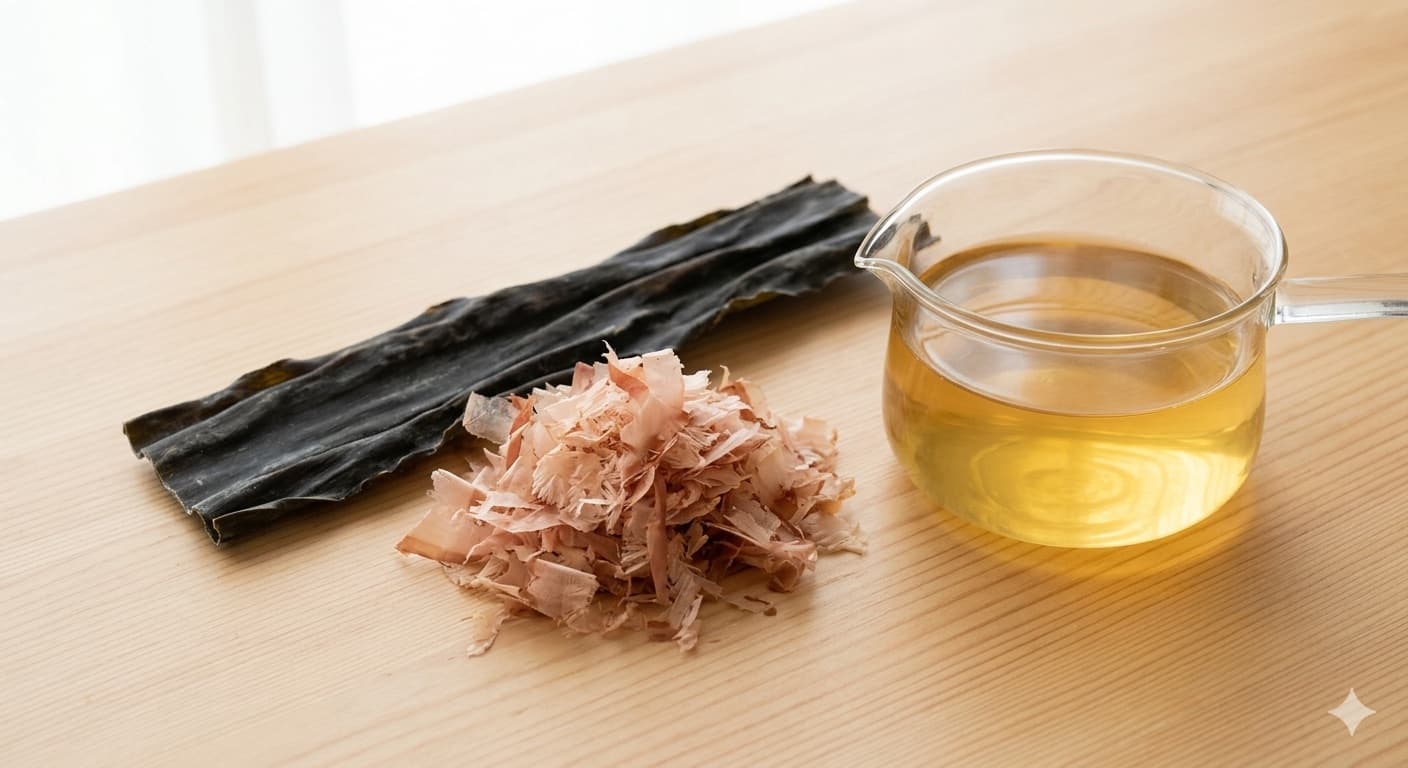
I made a simple kombu dashi - dried kelp soaked in cold water - and offered her one small spoon alongside her okayu.
She made her usual puzzled face. Then she swallowed. And then she seemed to lean in, just slightly.
After that, mealtimes had more smiles.
I wasn't surprised. As a registered dietitian, I understood exactly what dashi was doing. But watching it happen with my own daughter made it feel like a small miracle.
What Is Dashi?
Dashi is Japanese soup stock - the flavour foundation of almost everything in Japanese cooking. Unlike Western stocks simmered for hours with many ingredients, dashi is clean, quick, and made from just one or two ingredients.
For babies, dashi does something simple and powerful: it makes plain food taste better. A bowl of okayu with a few drops of kombu dashi is a completely different experience from plain okayu. Babies notice. And through dashi, they begin to understand umami - the fifth taste, that deep satisfying savouriness at the heart of Japanese food.
The Golden Rule: Plant-Based First
When introducing dashi to babies, the key principle is to start with plant-based dashi and move toward animal-based dashi gradually, as your baby develops.
The reason is simple: plant-based stocks are gentler on a baby's developing digestive system. Once your baby is comfortable with those, the fuller flavours of fish and meat-based stocks can follow naturally.
Stage 1 & 2 Dashi (from 5-8 months)
1. Vegetable Dashi
The gentlest dashi of all, and a wonderful place to start. Made from vegetables like carrot, onion, and komatsuna (Japanese mustard spinach), it is mild, naturally sweet, and completely safe from the very beginning of weaning.
How to make:
- 1 small carrot, roughly chopped
- 1/4 onion
- 1 small leaf komatsuna or spinach
- 400ml cold water
Place all ingredients in a small saucepan. Bring to a boil, then simmer on low heat for 20 minutes. Strain and cool completely. No salt.
2. Kombu Dashi
The most important dashi in Japanese cooking - and the first dashi most Japanese babies receive.
Kombu (dried kelp) is naturally rich in glutamates, the compound that gives umami its characteristic depth. For babies, dilute the finished dashi 5-10 times with water before use, and start with no more than 1 tablespoon per meal.
How to make:
- 5cm piece of dried kombu
- 300ml cold water
Wipe the kombu gently with a damp cloth (do not rinse - the white powder is flavour). Soak in cold water for 20-30 minutes. Heat over low until just before boiling - remove the kombu before it boils, or the dashi will turn bitter. Cool completely before using.
Important: Dilute 5-10x with water for early-stage babies.
3. Dried Shiitake Dashi
Made from dried shiitake mushrooms, this dashi has a gentle, earthy sweetness and is rich in guanylate - a type of umami compound that works beautifully alongside kombu.
It adds variety to your baby's flavour palette and is easy to make.
How to make:
- 2 small dried shiitake mushrooms
- 300ml cold water
Soak the dried shiitake in cold water for at least 30 minutes (or overnight in the refrigerator for a deeper flavour). Remove the mushrooms. The soaking liquid is your dashi. Do not heat - use as is, or warm gently. Cool before serving to baby.
The softened mushrooms can be finely minced and added to okayu or vegetable puree once your baby is in Stage 2.
4. Katsuobushi Dashi
Made from dried bonito flakes, katsuobushi dashi has a deeper, more savoury flavour than kombu dashi. Introduce this after your baby is comfortable with plant-based stocks - kombu, vegetables, and shiitake.
How to make:
- 3g dried bonito flakes (katsuobushi)
- 300ml water
Bring water to a gentle boil. Add the bonito flakes and immediately turn off the heat. Let steep for 2-3 minutes. Strain through a fine sieve - do not squeeze. Cool completely before serving.
Stage 3 & 4 Dashi (from 9-11 months)
By this stage, your baby's digestive system is more developed and ready for richer, more complex flavours.
5. Niboshi Dashi
Made from small dried sardines, niboshi dashi has a bold, deep flavour. It can be slightly bitter, so use sparingly at first and watch your baby's reaction.
How to make:
- 5-6 small dried sardines (niboshi), heads and innards removed
- 300ml cold water
Soak the niboshi in cold water for 30 minutes. Bring to a gentle boil, skim any foam, and simmer for 5 minutes. Strain and cool.
6. Ago Dashi
Made from dried flying fish (ago), this dashi is prized in Japan for its clean, elegant flavour - less fishy than niboshi, with a gentle sweetness. Introduce after your baby is comfortable with other fish.
How to make:
- 1 piece dried flying fish (ago), or 1 ago dashi bag
- 300ml cold water
Soak in cold water for 20-30 minutes. Bring to a gentle simmer for 5 minutes. Strain and cool.
7. Chicken Stock
Mild, versatile, and familiar to cooks around the world. For babies, always make it completely unsalted, and use it once your baby is comfortably eating chicken.
How to make:
- 100g chicken bones or chicken wings
- 400ml cold water
- A small piece of ginger (optional)
Blanch the chicken briefly in boiling water, then rinse. Place in a saucepan with fresh water. Simmer on low heat for 30-40 minutes, skimming any foam. Strain through a fine sieve and cool completely. No salt.
Dashi by Stage - Quick Reference
| Stage | Age | Dashi to use |
|---|---|---|
| Stage 1-2 | 5-8 months | Vegetable dashi, kombu dashi (diluted), dried shiitake dashi |
| Stage 2 | 7-8 months | Add katsuobushi dashi (after plant-based dashi is accepted) |
| Stage 3-4 | 9-11 months+ | Niboshi dashi, ago dashi, chicken stock |
A Note on Fortified Baby Dashi Granules
I want to mention something I used with my own daughter alongside homemade dashi.
In Japan, there are baby-specific dashi granules - unsalted, additive-free, and some are fortified with nutrients babies commonly lack: iron, vitamin D, and DHA. These are designed so that adding dashi to okayu or vegetable puree also delivers targeted nutritional support.
As a registered dietitian, I have no hesitation recommending them for busy days. Homemade dashi is wonderful - but a good baby dashi granule is not a shortcut. It is a smart choice.
Look for products labelled for weaning or for babies, with no added salt. Brands such as Wakodo produce these in Japan; outside Japan, check Japanese grocery stores or online.
Storage Tips
All dashi can be refrigerated for up to 3 days, or frozen in ice cube trays for up to 2 weeks. One ice cube is roughly one serving for an early-stage baby. Defrost with a small splash of water and warm gently - never microwave on high.
What Comes After Dashi
Once your baby is comfortable with dashi-flavoured okayu and vegetable purees, the Japanese weaning world opens up considerably:
Yumi is a registered dietitian and certified school nutrition teacher. She introduced kombu dashi to her daughter one week into weaning - and watched the smiles multiply.