
The Moment I Understood Batch Cooking
My daughter was seven months old. It was 6pm on a Wednesday. She was hungry, I was exhausted, and I had nothing prepared.
I boiled a small amount of kabocha, mashed it with shaking hands, added some dashi, and stood at the kitchen counter feeding it to her while still wearing my apron. It worked. But I swore to myself that I would never be in that position again.
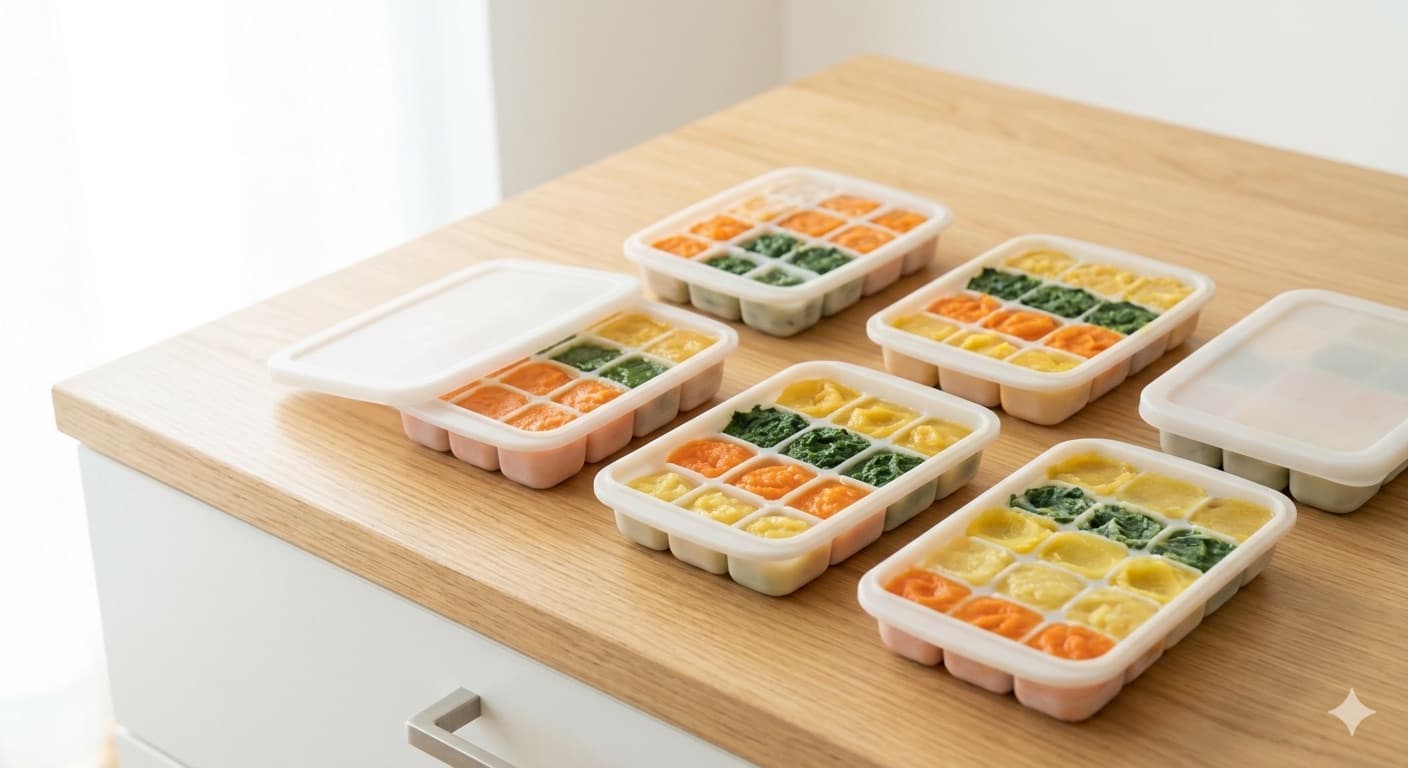
The following Saturday morning, I batch-cooked for three hours. I filled two ice cube trays with okayu, two with vegetable purees, and several small containers with dashi and soft-cooked fish. I labelled everything. I put it all in the freezer.
That freezer stash changed my week. It changed my mood. It changed how I felt about weaning.
Batch cooking is not a hack for lazy parents. It is a core strategy used by Japanese families who take rinyushoku seriously. The time you spend on Sunday morning making your freezer stash is time you give back to yourself every single weekday evening.
Here is how to do it properly.
Why the Freezer Matters in Japanese Weaning
Japanese baby food is often cooked from scratch. There are no pouches of rice porridge on the supermarket shelf with Ministry of Health certification. The real foods - okayu, dashi, vegetable purees, soft-cooked fish - are made at home.
This is a good thing. Home-cooked rinyushoku gives you complete control over ingredients, salt content, and texture. But it does require time, and time is the one thing new parents have the least of.
Freezing solves this problem. It allows you to cook once and eat five or six times. It keeps food safe between cooking sessions. And it means that a nutritious, homemade meal is always thirty seconds of microwave time away.
What Freezes Well
Okayu (Rice Porridge)
Okayu is one of the best foods to freeze, and it is the foundation of Japanese weaning.
Cook a large batch - four to five times the amount your baby needs for one serving - using your normal rice-to-water ratio for the current stage. Allow it to cool completely before portioning.
How to freeze: Spoon into silicone ice cube trays or small silicone moulds. Each cube should be approximately 20-30ml - a single baby serving. Once frozen solid (after about three hours), transfer the cubes to a clearly labelled freezer bag.
How to defrost: Place one or two cubes in a small microwave-safe bowl. Add a few drops of water or dashi. Microwave in 20-second intervals, stirring between each, until evenly heated through. Check the temperature before serving.
Freezer life: Up to one week.
Vegetable Purees
Almost all vegetable purees freeze exceptionally well. This includes kabocha, carrot, broccoli, sweet potato (satsumaimo), daikon, spinach, corn, and most other vegetables used in Japanese weaning.
Cook the vegetables until very soft - steaming preserves more nutrients than boiling - then puree to the appropriate consistency for your baby's current stage. Cool completely before freezing.
How to freeze: Ice cube trays are ideal. One cube per serving. Transferring to labelled bags after freezing keeps your trays available for the next batch.
Storage tip: Label with the vegetable name and date. After a few weeks of batch cooking, your freezer will contain many little cubes and they all look identical. Trust me on the labels.
Freezer life: Up to one week.
Dashi (Japanese Stock)
Homemade dashi is the secret backbone of Japanese baby food. It adds umami and depth to okayu and vegetable dishes from Stage 2 onwards, without adding any salt.
Making dashi takes about 20 minutes and fills your kitchen with a beautiful aroma. Freeze it in small portions and you will always have it on hand.
How to freeze: Freeze in ice cube trays. One cube is approximately 15-20ml - enough to add flavour to a single portion of okayu or stir into a vegetable puree.
Types of dashi that freeze well:
- Kombu dashi (kelp stock) - perfect for Stage 2 onwards
- Katsuo-kombu dashi (bonito and kelp) - from Stage 2 onwards
- Iriko dashi (dried sardine stock) - from Stage 3 onwards, stronger flavour
Freezer life: Up to two weeks.
Minced Meat
Chicken and beef, cooked and minced finely, freeze well and are enormously useful for Stage 3 onwards when protein variety is important.
How to prepare: Poach the meat until fully cooked, then use a food processor or mince very finely by hand. Do not add seasoning before freezing.
How to freeze: Small portions in ice cube trays, or flattened into thin sheets in small freezer bags. A flat sheet can be broken into portions directly from frozen.
Freezer life: Up to one week.
White Fish
Cooked white fish - cod, flounder (hirame), sea bream (tai) - freezes reasonably well, though the texture is more delicate than meat.
How to prepare: Steam or poach. Remove all bones meticulously. Flake finely or puree depending on stage.
How to freeze: Small portions in silicone moulds or ice cube trays. Do not freeze with dashi or sauce, as this can make the texture watery on defrosting.
Freezer life: Up to one week.
What Does Not Freeze Well
Tofu
Tofu is one of my favourite ingredients for Japanese baby food - protein-rich, mild in flavour, and easy to mash. But it does not freeze well.
Freezing causes tofu to lose its soft, silky texture. Frozen and defrosted tofu becomes spongy and slightly grainy - a texture change that most babies reject, and rightly so.
Buy tofu fresh and use it within two days of opening. It is inexpensive and widely available, so this is not a hardship.
Exception: If you want the spongy "frozen tofu" texture (kori-dofu) for Stage 4+ children who can manage more complex textures, you can freeze intentionally - but this is a completely different food and texture from the silken tofu used in early weaning.
Potato (じゃがいも)
Cooked potato becomes grainy and watery when frozen and defrosted. The starch structure changes in a way that affects texture significantly.
Alternative: Sweet potato (satsumaimo) and kabocha both freeze beautifully. If you want the starchy vegetable puree category in your freezer, these are the better choices.
Cucumber and Lettuce
Raw vegetables with high water content do not survive freezing. They turn mushy and unpleasant. But since these are generally not used in early baby food (raw vegetables are not appropriate before Stage 4), this is rarely an issue in practice.
Freezer Equipment Worth Having
Silicone ice cube trays: The most essential item. The flexible silicone makes it easy to pop out frozen cubes without cracking. Choose trays with smaller cells (15-20ml) for Stage 1-2, and larger cells (30-40ml) for Stage 3-4 as portion sizes grow.
Silicone baby food moulds: Available in Japanese baby stores and online, these come in various shapes and sizes designed specifically for baby food portions. Some have lids, which are useful for dashi.
Small freezer bags with label space: Transfer frozen cubes into labelled bags after they are frozen solid to free up your trays. Write the food name and date with a permanent marker.
A permanent marker: Self-explanatory, but easy to forget.
How Long Can Baby Food Stay in the Freezer?
Japan's Ministry of Health guidelines and standard food safety practice recommend:
| Food | Freezer Life |
|---|---|
| Okayu (rice porridge) | 1 week |
| Vegetable purees | 1 week |
| Dashi (plain stock) | 2 weeks |
| Cooked fish | 1 week |
| Cooked minced meat | 1 week |
| Cooked egg (mixed into okayu) | Do not refreeze |
These are conservative guidelines for baby food specifically. Adult food is often frozen for longer, but for babies, the shorter timeframes reflect both nutritional quality and food safety priorities.
The simplest system: batch cook on Sunday, label everything with the date, use within the week. By the following Saturday you should be running low, which prompts another batch cooking session.
How to Defrost Safely
Microwave defrosting is the recommended method for Japanese baby food - it is fast, safe, and convenient. However, microwaves create hot spots that can burn your baby's mouth. You must stir thoroughly and test the temperature before every feeding.
The method I use:
- Place one or two frozen cubes in a small microwave-safe bowl.
- Add 1-2 teaspoons of water or dashi to prevent drying.
- Microwave in 20-second bursts, stirring between each interval.
- After 2-3 intervals, stir thoroughly to break up any hot spots.
- Test the temperature on the inside of your wrist. It should feel comfortably warm - not hot.
- If it is too hot, let it cool. Never blow on your baby's food - this transfers bacteria from your mouth.
Do not refreeze thawed food. Once defrosted, food should be eaten at that meal or discarded.
Do not defrost at room temperature. This allows bacteria to multiply in the outer layers while the centre is still frozen.
My Weekly Batch Cooking Routine
When my daughter was in full rinyushoku, my Sunday morning batch cooking session took about 90 minutes. Here is what it looked like:
While the okayu simmered (30 minutes): I made a pot of katsuo-kombu dashi and started steaming two or three vegetables simultaneously.
While the okayu and dashi cooled: I finely minced or pureed the vegetables and, if needed, poached a small piece of chicken or fish.
Portioning (15 minutes): Everything into ice cube trays, labelled with the food name and date.
Freezing: Three hours in the freezer until solid, then transfer to bags.
Total active time: About 45-60 minutes. The rest is hands-off cooking time I could use for other things.
That 90 minutes bought me five weekday evenings where I could have a nutritious, home-cooked meal ready for my daughter in under two minutes.
A Note From My Kitchen
I want to be honest: the first batch cooking session felt complicated. I had ice cube trays everywhere, I burned one batch of kabocha because I forgot the heat was still on, and I ran out of freezer bags.
By the third Sunday, it felt completely natural. By the fifth, I was doing it on autopilot while listening to a podcast.
The learning curve is real but short. Give yourself permission for the first two sessions to be imperfect. The goal is not a perfectly organised freezer photographed for Instagram. The goal is a small collection of labelled bags that means tomorrow's dinner is already handled.
That is enough. That is more than enough.
What to Read Next
- 10:1 Okayu - Japanese Rice Porridge for Babies (Stage 1)
- Baby Dashi Guide - Every Type of Japanese Stock for Weaning, by Stage
- When Can Babies Have Miso, Soy Sauce and Japanese Seasonings?
Yumi is a registered dietitian (管理栄養士) and certified school nutrition teacher (栄養教諭) with 7.5 years of experience planning school lunches in Japan. She is a first-time mother currently navigating rinyushoku with her daughter, born in 2025.
Sources:
- Ministry of Health, Labour and Welfare, Japan. Enyuushoku Shien Guide (Weaning Support Guide), 2019
- Food Safety Commission of Japan, "Food Safety Risk Assessment - Microbiological Risks in Infant Foods," 2021
- Japan Dietetic Association, "Practical Guidelines for Infant Nutrition," 2022
- United States Department of Agriculture, "Safe Food Handling - Freezing and Food Safety," 2023