
What Is Natto, and Why Does It Matter for Babies
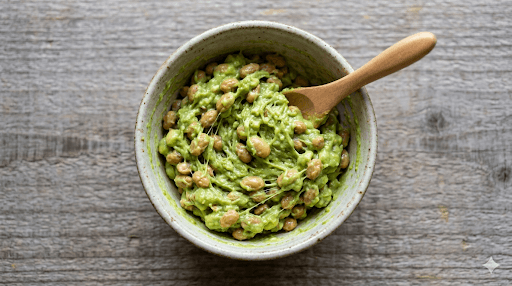
Natto is fermented soybeans - sticky, strong-smelling, and, for many people outside Japan, an acquired taste. For Japanese babies, it is also one of the most nutritionally useful foods available, and a common part of weaning once a baby is ready for its texture.
What makes natto valuable:
- Protein - a good plant-based protein source
- Vitamin K2 - natto is one of the richest natural sources of K2, which plays a role in bone development
- Iron - contributes to the iron intake covered in our iron-rich baby foods guide
- Probiotics - the fermentation process introduces beneficial bacteria, which may support digestive health and has been discussed in relation to easing constipation
- Fibre - supports regular digestion
Given all this, it is easy to see why natto has a place in Japanese weaning - the question is mostly about timing and preparation.
When to Introduce Natto
Most Japanese weaning guides introduce natto from Stage 3 (around 9-11 months), though some families introduce a small, well-prepared amount slightly earlier in late Stage 2.
There are two reasons for this timing rather than introducing it at Stage 1 or early Stage 2:
-
Texture. Natto's sticky strands (the "neba neba") can be a minor handling challenge for babies who are still working on basic chewing and swallowing coordination. By Stage 3, most babies manage this fine, especially with the preparation steps below.
-
Soy as an allergen. Soy is one of the foods discussed in our guide to introducing allergens. While tofu (also soy-based) is typically introduced earlier and without issue for most babies, it is sensible to have established that your baby tolerates soy in a simpler form (like tofu) before introducing fermented soybeans.
If your baby has a known soy allergy, or if other family members have soy allergies, talk to your pediatrician before introducing natto.
How to Prepare Natto for Babies
The single biggest barrier to babies eating natto is not the taste - many babies take to it readily, since the flavour is mild and slightly savoury underneath the funk that adults notice more - but the stringy texture. Here is how to manage it.
Step 1: Chop it finely
Before serving, chop natto finely with a knife, or pulse briefly in a small chopper. This breaks up the long sticky strands into something much more manageable for a baby still learning to chew.
Step 2: Rinse, if needed (optional)
Some parents find that briefly rinsing natto under warm water reduces the stickiness and the strength of the smell, which can help with first introductions. This does wash away a small amount of the fermentation liquid (where some of the beneficial bacteria are concentrated), so it is a personal choice - not rinsing is also completely fine.
Step 3: Mix with something familiar
Natto pairs very well with foods your baby already knows, which helps with acceptance and also further breaks up the texture:
- Okayu - stir finely chopped natto into rice porridge
- Avocado - the creaminess of avocado balances natto's stickiness beautifully; see our Natto and Avocado Mash recipe
- Grated daikon - a classic Japanese pairing, also gentle on digestion
Step 4: Skip the usual seasonings
Adults typically eat natto with soy sauce, mustard, and sometimes a raw egg mixed in. None of these are appropriate for babies. Plain, finely chopped natto mixed into a familiar food is all that is needed - and is closer to how it is introduced in Japanese households anyway.
A Simple First Serving
| Stage | Preparation | Amount to start |
|---|---|---|
| Late Stage 2 / early Stage 3 | Finely chopped, mixed into okayu | 1 teaspoon |
| Stage 3 | Finely chopped, mixed with mashed avocado or daikon | 1-2 teaspoons |
| Stage 4 | Lightly chopped, mixed into rice as part of a small meal | 1 tablespoon |
As with any new food, introduce natto on its own first (mixed into a familiar base), and wait two to three days before introducing another new food, so you can identify any reaction.
What if My Baby Doesn't Like It
Some babies are put off by the smell or texture even when it is well prepared, and that is completely fine - natto is a "bonus" nutritious food, not an essential one. The nutrients it provides (vitamin K2, iron, probiotics, protein) are also available from other foods in a varied Japanese weaning diet, including tofu, leafy greens, and fish.
If your baby refuses it, you can simply try again every few weeks without pressure. Many babies who reject a food at nine months accept it happily by fifteen months. For more on this, see our guide on when your baby refuses food.
A Note From My Own Experience
I will be honest: natto was one of the foods I was most curious to see how my daughter would react to, partly because so many of my non-Japanese friends find it genuinely difficult as adults, let alone as a first food for a baby.
She surprised me. Mixed into okayu, finely chopped, she ate it without any reaction to the smell at all - babies, it turns out, often do not have the same associations adults bring to a food. It was a good reminder that a baby's palate, at this stage, is still wonderfully unbiased. The strong opinions about natto that so many adults have are, in large part, learned later.
What to Read Next
- Natto and Avocado Mash recipe
- Iron-Rich Japanese Baby Foods - Preventing Iron Deficiency During Weaning
- Introducing Allergens to Japanese Babies - Egg, Wheat, Soy and More
- Baby Constipation During Weaning - The Japanese Dietary Approach
Yumi is a registered dietitian (管理栄養士) and certified school nutrition teacher (栄養教諭) with 7.5 years of experience planning school lunches in Japan. She is now a first-time mother navigating rinyushoku with her own daughter, applying everything she has learned - and discovering how different it is when the baby is yours.
Sources:
- Ministry of Health, Labour and Welfare, Japan. Enyuushoku Shien Guide (Weaning Support Guide), 2019
- Japan Pediatric Society, "Guidelines for Infant Feeding," 2022
- Tsukamoto Y et al., "Vitamin K2 (menaquinone-7) content in fermented soybean (natto)," Journal of Nutritional Science and Vitaminology, 2000
- Ministry of Agriculture, Forestry and Fisheries, Japan, nutritional composition database for natto