
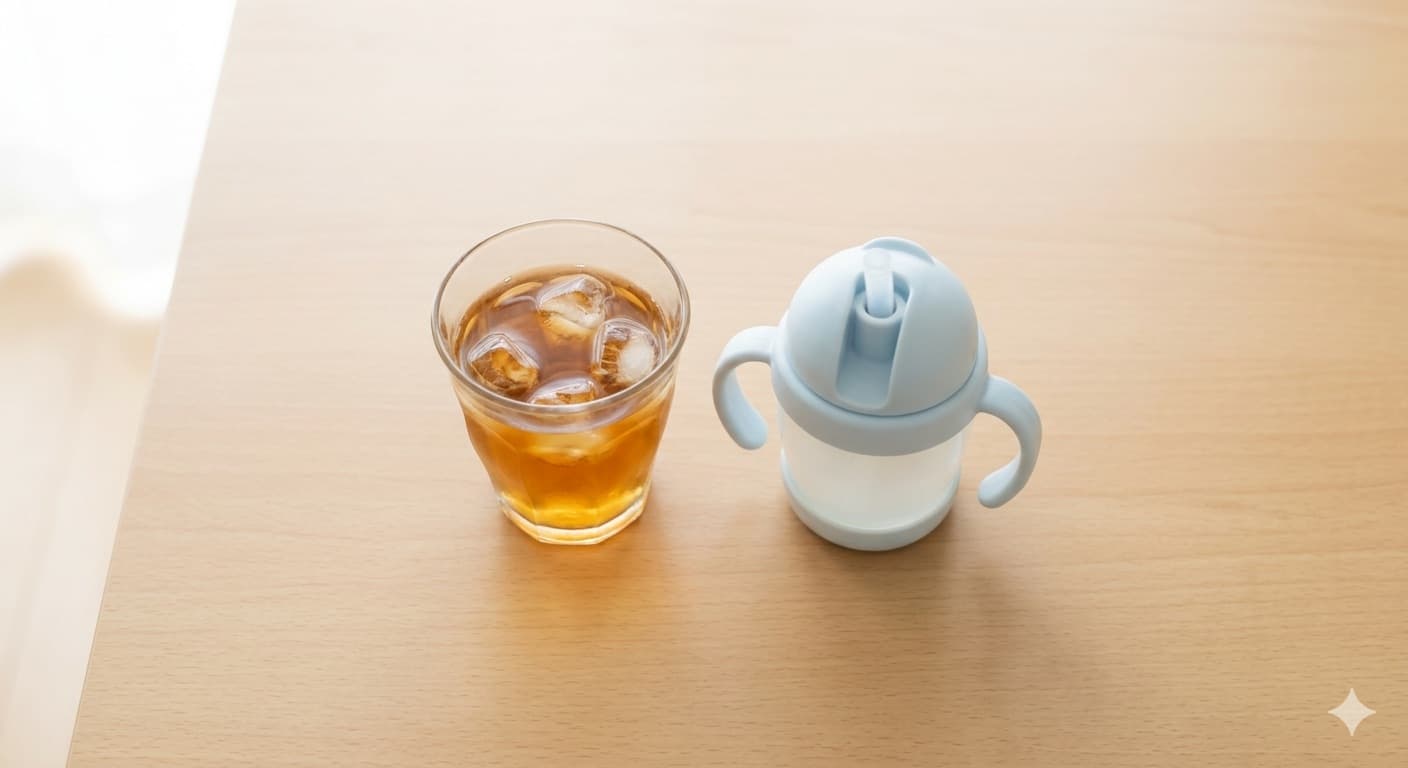
Why Drinks Deserve Their Own Guide
Most weaning guides focus heavily on food, and understandably so - but questions about what a baby can drink come up constantly, especially once solids begin and especially in hot weather. When can water be offered? What about the barley tea every Japanese household seems to keep in the fridge? Is dashi a food or a drink? Can fruit juice ever be okay?
This guide walks through drinks stage by stage, with a particular focus on mugicha, which is so central to Japanese family life that many babies encounter it before they encounter most solid foods.
Before Solids: Breast Milk or Formula Only
For the first six months, breast milk or formula provides all the fluid a baby needs - including in hot weather. Plain water is not recommended before six months, as it can fill a small stomach without providing nutrition, and in rare cases, too much water can disrupt a young baby's electrolyte balance.
This is true everywhere, not just in Japan, but it is worth stating clearly because "is my baby thirsty" is one of the most common early parenting worries, especially in summer.
Stage 1-2 (5-8 months): Small Amounts of Water and Mugicha
Once solids begin, small amounts of water or mugicha (roasted barley tea) can be offered, typically with or after meals.
Why Mugicha Specifically
Mugicha is roasted barley steeped in water, similar in preparation to tea but completely caffeine-free - this is the key reason it has been a Japanese household staple for babies and children for generations, long before "decaf" anything existed as a concept. It has a mild, slightly nutty, faintly sweet flavour that most babies accept easily, and in Japan it is often the first "drink" (beyond milk) a baby tries.
To prepare mugicha for a baby:
- Use barley tea bags or roasted barley, steeped in hot water as directed
- Dilute it further with water for babies - roughly double the dilution used for adults
- Serve it cooled to room temperature or slightly warm, never hot
- No sugar, ever
How Much, and When
At this stage, water or diluted mugicha is offered in very small amounts - a few sips from a cup or spoon, mainly with meals, to help with swallowing and to introduce the idea of drinking from something other than a breast or bottle. It is not meant to replace breast milk or formula, which remain the primary source of hydration and nutrition.
Stage 3-4 (9-18 months): Water and Mugicha at Mealtimes
As meals become more frequent and more substantial, offering water or mugicha alongside meals becomes a regular habit. This is also the stage where many families introduce a straw cup or open cup, which Japanese feeding guidance tends to encourage earlier than a focus on sippy cups - open cups, even if messy at first, support the oral motor development needed for mature drinking and speech.
A simple rule of thumb many Japanese caregivers use: offer water or mugicha with meals, and let breast milk, formula, or (after 12 months) cow's milk cover hydration between meals, gradually shifting the balance as the baby gets older and eats more.
Where Does Dashi Fit?
Dashi - the kombu and katsuobushi stock covered in our Baby Dashi Guide - is generally treated as part of a dish rather than a drink, but it is worth mentioning here because it does contribute to a baby's fluid intake, especially in soups.
A bowl of miso soup or a dashi-based vegetable soup (see our Miso Soup for Babies recipe) delivers both nutrition and fluid in one go, which is particularly useful during illness, hot weather, or any time a baby is eating less solid food than usual but still needs fluids.
What to Avoid
Fruit Juice
Fruit juice, even 100% juice with no added sugar, is generally not recommended for babies under 12 months, and in limited amounts after that. It is easy to over-consume, displaces more nutritious foods and drinks, and the sugar - even naturally occurring - is concentrated in a way whole fruit is not. If you want to offer fruit flavour, a small piece of real fruit is preferable at any stage where textures allow it.
Cow's Milk as a Drink (Before 12 Months)
Cow's milk used in cooking (a small amount in a sauce, for example) is generally fine from around 9 months in many guidelines, but cow's milk as a primary drink is typically held until after 12 months, when it can gradually begin to take the place of formula as a drink, alongside continued solid foods.
Sweetened Drinks of Any Kind
This includes flavoured milks, sports drinks, and sweetened teas. None of these have a place in a baby's diet, and establishing this early - by making water and mugicha the "normal" drinks from the start - tends to make this much easier later, when a toddler starts noticing what other people are drinking.
A Quick Reference Table
| Age | Primary hydration | Additional drinks |
|---|---|---|
| 0-6 months | Breast milk / formula | None |
| 6-8 months (Stage 1-2) | Breast milk / formula | Small sips of water or diluted mugicha with meals |
| 9-11 months (Stage 3) | Breast milk / formula | Water or mugicha with meals, from an open cup |
| 12-18 months (Stage 4) | Breast milk / formula / cow's milk | Water and mugicha regularly; juice avoided or very limited |
A Note From My Own Experience
Mugicha was, without exaggeration, in our fridge before my daughter was even born - it is just what is always there in a Japanese kitchen, the way some households always have a pitcher of iced tea. When the time came to offer her something beyond milk, it was the obvious, almost automatic choice, and she took to it without any fuss.
What I noticed later is that this early, casual introduction meant that by the time she was a toddler, water and mugicha were simply "what we drink" - there was never a moment of negotiating around juice or sweet drinks, because those were never part of the picture to begin with. It is a small thing, but I think it is one of the more quietly effective pieces of Japanese feeding culture: the healthy default is established so early and so unremarkably that it never has to be defended later.
What to Read Next
- Baby Dashi Guide - Every Type of Japanese Stock for Weaning, by Stage
- Baby Constipation During Weaning - The Japanese Dietary Approach
- Stage 3 Baby Food - The Japanese Approach to 9-11 Month Feeding
- When to Start Solids - The Japanese Approach to Beginning Baby Food
Yumi is a registered dietitian (管理栄養士) and certified school nutrition teacher (栄養教諭) with 7.5 years of experience planning school lunches in Japan. She is now a first-time mother navigating rinyushoku with her own daughter, applying everything she has learned - and discovering how different it is when the baby is yours.
Sources:
- Ministry of Health, Labour and Welfare, Japan. Enyuushoku Shien Guide (Weaning Support Guide), 2019
- Japan Pediatric Society, "Guidelines for Infant Feeding," 2022
- American Academy of Pediatrics, "Recommendations on Fruit Juice and Sweetened Beverages for Children," 2017
- World Health Organization, "Infant and Young Child Feeding," fact sheet, 2023