
Two Phrases, Said Millions of Times
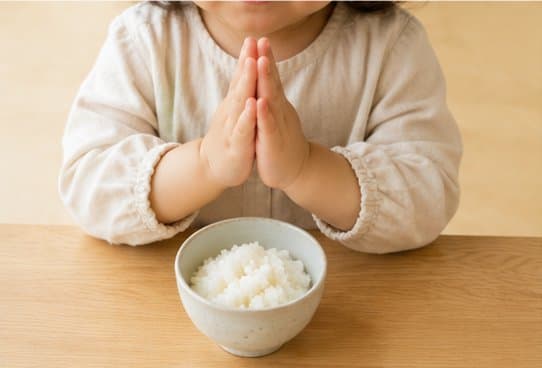
If you eat with Japanese people, you will hear two phrases that bookend every meal. Before eating: "itadakimasu." After: "gochisousama deshita." Children learn them almost before they can speak, hands pressed together, often before they understand a word of what they mean.
These are not throwaway pleasantries like "enjoy your meal." They carry real depth - and teaching them to a child is one of the gentlest and most lasting pieces of food education a Japanese family passes on.
What Itadakimasu Really Means
"Itadakimasu" is often translated as "let's eat," but that misses almost everything. The word comes from the humble form of the verb "to receive" (itadaku), and historically referred to lifting something respectfully to one's head to receive it.
At the table, it expresses gratitude for receiving life. Crucially, this is not only thanks to the cook. It is thanks to the living things - plants and animals - whose lives became this meal, and to everyone whose work brought the food to the table: farmers, fishers, those who transported and prepared it.
There is a phrase that captures the fuller sentiment: gratitude for "inochi wo itadaku" - receiving life itself. Said properly, itadakimasu acknowledges that we live because other lives sustain us.
What Gochisousama Means
"Gochisousama deshita," said at the end, completes the circle. The "chisou" (馳走) in it originally meant running around - the effort of dashing about to gather and prepare food for a guest. The "go" and "sama" are marks of respect.
So gochisousama is thanks for the effort and care that went into the meal - a small bow to everyone who ran around, literally or figuratively, to feed you. Together, the two phrases frame eating as something received with thanks and concluded with appreciation.
Why This Matters for Children
This daily ritual is a cornerstone of shokuiku, Japan's food education philosophy. Its power lies in repetition. A child who says these words at every meal, for years, absorbs several ideas without ever being lectured:
- Food is not automatic. It comes from living things and human effort, and deserves thanks.
- Eating is a shared, marked moment - a small pause, not something done absent-mindedly while distracted.
- Gratitude is a habit, not a feeling you wait for. It is practised daily until it becomes part of who you are.
Research and long experience in Japanese schools suggest that this kind of mindful framing supports a healthier relationship with food - more attentive, less wasteful, more connected to where meals come from. It pairs naturally with the principle of hara hachi bu, eating with awareness rather than on autopilot.
How to Introduce It to a Baby or Toddler
You do not need to be Japanese, or to explain the etymology, to give a child this habit. The practice is simple:
- Model it. Say itadakimasu together before eating and gochisousama after, every time. Children learn by imitation long before comprehension.
- Add the gesture. Hands together, a small bow of the head. Babies love the ritual of it and will often join in with delight before they can speak.
- Keep it light. It is a warm habit, not a rule to enforce. The point is gratitude, not discipline.
- Grow the meaning over time. As your child gets older, you can explain, simply, that we are thanking the food and the people who made it. The understanding deepens with age.
Even a baby in a high chair, clapping their hands together at the start of a meal, is beginning something worthwhile.
A Note From My Own Experience
My daughter learned the itadakimasu gesture - both hands pressed together, a little bow - long before she could eat most of what was in front of her. She would do it with such serious concentration, then beam at us, that it became one of the small joys of every meal.
She has no idea yet that she is thanking the rice plant and the fishermen and her grandmother who cooked. But the shape of gratitude is forming in her anyway, one meal at a time. As a dietitian I can talk at length about nutrients - but this wordless little habit of thanks may turn out to matter just as much for how she relates to food across her life.
What to Read Next
- What Is Shokuiku? Japan's Food Education Philosophy Explained
- Hara Hachi Bu: Teaching Children to Listen to Their Body, Not Their Plate
- Bento Culture: What the Japanese Lunchbox Teaches Children About Food
- Ichiju Sansai: The Japanese Meal Formula That Makes Nutrition Simple
Yumi is a registered dietitian (管理栄養士) and certified school nutrition teacher (栄養教諭) with 7.5 years of experience planning school lunches in Japan. She is now a first-time mother navigating rinyushoku with her own daughter, applying everything she has learned - and discovering how different it is when the baby is yours.
Sources:
- Ministry of Education, Culture, Sports, Science and Technology (MEXT), Japan, shokuiku materials
- Japanese linguistic and cultural references on itadakimasu (いただきます) and gochisousama (ごちそうさま)