
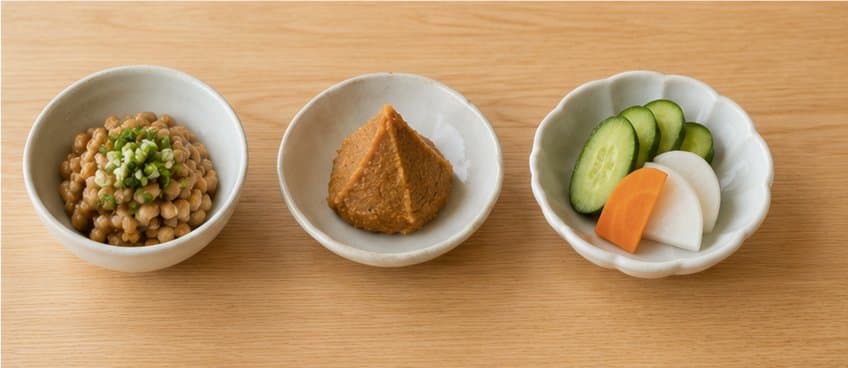
A Culture Built on Fermentation
Japanese cuisine is, to a remarkable degree, a cuisine of fermentation. Miso, soy sauce, natto, rice vinegar, pickles (tsukemono), katsuobushi, sake, mirin - so many of the foundational flavours of washoku are created by microbes working on simple ingredients over time. The mould koji (Aspergillus oryzae) is so central that it has been named Japan's "national fungus."
For babies, this fermented heritage offers some genuinely useful foods - alongside some that must wait. Here is how to think about fermented foods and the developing gut.
The Infant Gut Microbiome: What We Know
A baby is born with a nearly blank microbial slate. Over the first months and years, the gut is colonised by trillions of bacteria, and this community - the gut microbiome - is increasingly understood to influence digestion, immune development, and more.
The science here is genuinely promising but still maturing, so it is worth being measured rather than making grand claims. What is reasonably well supported:
- The early gut microbiome is shaped by birth mode, breast milk or formula, and - once weaning begins - by the diversity of foods introduced.
- Dietary variety matters. A varied weaning diet, rich in different vegetables, grains, and proteins, supports a more diverse microbiome - and diversity is generally considered favourable.
- Some fermented foods contain beneficial live cultures and compounds, though how much survives digestion and meaningfully colonises a baby's gut is still being researched.
The honest summary: a varied diet that happens to include gentle fermented foods is a sound approach, but fermented foods are not a magic supplement, and no single food "fixes" gut health.
Fermented Foods That Suit Babies
Natto (fermented soybeans)
Natto is the standout. It is rich in protein, iron, and vitamin K2, contains beneficial Bacillus subtilis cultures, and can be introduced from around Stage 2 (7-8 months). It is one of the few fermented foods that is both baby-appropriate and nutritionally generous. See our full natto introduction guide and the Natto and Avocado Mash recipe for how to manage the sticky texture safely.
Miso (in tiny amounts, later)
Miso is fermented and flavourful, but it is also salty - so it is about sodium, not the fermentation, that we go carefully. A very small amount of miso can flavour a baby's soup from around Stage 2-3, well diluted. See our Miso Soup for Babies recipe and the seasonings guide for safe timing and amounts.
Plain yogurt (a non-Japanese but useful option)
Though not traditionally Japanese, unsweetened plain yogurt is a gentle, widely available fermented food with live cultures that can be offered from around Stage 2. Choose plain, full-fat, unsweetened.
Fermented Foods to Delay or Limit
Not everything in the Japanese fermented pantry suits a baby:
- Soy sauce and pickles (tsukemono): High in salt; these belong to Stage 4 and beyond, and only in tiny amounts.
- Strong, salty, or alcohol-containing ferments: Sake and mirin contain alcohol (cooked off in dishes); strongly fermented or very salty pickles are not suitable for babies.
- Unpasteurised or very mature cheeses and honey-containing ferments: And remember, no honey at all under 12 months - see our seasonings guide.
The Bigger Picture: Variety Over Any Single Food
If there is one evidence-based takeaway, it is this: the most reliable way to support your baby's developing gut is not a special fermented "superfood," but a steadily widening variety of whole foods through weaning. Many vegetables, different grains, a range of proteins, and a few gentle fermented foods like natto all contribute.
Japan's traditional diet does this naturally - it is varied, plant-rich, fermentation-friendly, and low in ultra-processed food. That overall pattern, more than any one jar of pickles, is what makes it nourishing.
A Note From My Own Experience
Natto was the fermented food I was most curious to give my daughter - partly for the nutrition, partly because plenty of adults outside Japan find it challenging, and I wondered whether starting young would make it simply normal to her. It did. She took to the sticky strands without a flicker of the hesitation grown-ups often show.
As a dietitian, I try not to over-promise about gut health - the science is exciting but young, and I would rather be honest than fashionable. What I am confident about is the old, unglamorous advice: feed a baby a wide variety of real foods, including a few of Japan's gentle ferments, and you are doing right by their gut.
What to Read Next
- Introducing Natto to Babies: A Step-by-Step Guide
- Tofu and Soy Foods for Babies - A Japanese Weaning Staple, Explained
- When Can Babies Have Miso, Soy Sauce and Japanese Seasonings?
- Umami and Baby Food: Why Japan's Fifth Taste Is Perfect for Young Palates
Yumi is a registered dietitian (管理栄養士) and certified school nutrition teacher (栄養教諭) with 7.5 years of experience planning school lunches in Japan. She is now a first-time mother navigating rinyushoku with her own daughter, applying everything she has learned - and discovering how different it is when the baby is yours.
Sources:
- Ministry of Health, Labour and Welfare, Japan. Enyuushoku Shien Guide (Weaning Support Guide), 2019
- Milani C et al., "The First Microbial Colonizers of the Human Gut," Microbiology and Molecular Biology Reviews, 2017
- Laursen MF et al., "Infant gut microbiota development and the influence of diet," Journal of Nutrition / related reviews, 2017
- Marco ML et al., "Health benefits of fermented foods," Current Opinion in Biotechnology, 2017