
Why Tofu Comes First
Ask a Japanese parent what their baby's first protein was, and the answer is very often tofu. There are good reasons it holds this place. Tofu is soft enough to need almost no modification for a baby, it is gentle on the digestive system, it is a complete plant protein, and its silky texture is already close to the target consistency of early weaning.
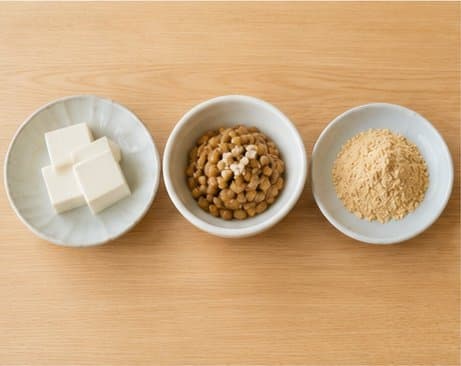
Soy foods run right through Japanese cuisine - tofu, natto, miso, soy sauce, kinako, edamame - so soy is also one of the first cultural flavours a Japanese baby meets. This guide covers how to introduce them safely, and addresses the soy-safety questions parents sometimes raise.
Is Soy Safe for Babies? Addressing the Phytoestrogen Worry
Let us deal with the common concern directly, because it worries a lot of parents. Soy contains isoflavones, plant compounds sometimes called phytoestrogens, and you may have read alarming claims that these disrupt hormones in babies.
Here is what the evidence actually shows. Soy-based infant formula has been fed to millions of babies worldwide for over 60 years, and large reviews - including assessments by the American Academy of Pediatrics and the U.S. National Toxicology Program - have found no convincing evidence of harm to growth, development, or later hormonal function in humans. Systematic reviews show no link between soy in infancy and earlier puberty. The frightening findings often quoted come from high-dose animal studies that do not translate to how humans process these compounds.
The practical takeaway: normal amounts of whole soy foods - tofu, natto, a little miso - as part of a varied weaning diet are considered safe. As always, variety is the goal; soy should be one of many foods, not the entire diet.
Soy Foods by Stage
Stage 1 (5-6 months)
- Silken tofu (kinu-dofu): An ideal first protein. Boil briefly to be safe, then mash until completely smooth. Start with around 10-15g. See our Tofu and Pumpkin Mash recipe.
Stage 2 (7-8 months)
- Tofu, increased: Silken or soft tofu, mashed, up to around 30-40g per meal.
- Natto: Fermented soybeans can begin in this stage. Finely chopped or hikiwari (pre-ground) natto, briefly rinsed to reduce stickiness, mixed into okayu. See our dedicated natto guide and the Natto and Avocado Mash recipe.
- Kinako (roasted soybean flour): A pinch stirred into okayu or mashed vegetables adds protein and a gentle nutty flavour. Always mix into a moist food - never offer dry, as the fine powder can make a baby cough.
Stage 3 (9-11 months)
- Firmer (momen) tofu: Now the slightly firmer cotton tofu can be used, cut into soft cubes for self-feeding practice.
- Koya-dofu (freeze-dried tofu): Rehydrated and finely grated or chopped, koya-dofu is a traditional, iron- and protein-rich option that simmers beautifully in dashi.
- Edamame: Skins removed, mashed - the tough outer skin is a choking and digestion concern, so always remove it.
Stage 4 (12-18 months)
- Miso and soy sauce: Only now, and only in tiny amounts, do the salty soy seasonings enter the picture. See our seasonings guide for timing - the limit at this age is about sodium, not soy itself.
A Quick Word on Allergy
Soy is one of the recognised allergens, though soy allergy is generally less common and often milder than some others. Introduce each new soy food - tofu, then natto, and so on - one at a time, watching for any reaction over a couple of days, exactly as with other allergens. Our allergen introduction guide covers the method.
A Note From My Own Experience
Tofu was my daughter's first protein, as it was mine decades ago, and as it has been for Japanese babies for generations. There is something quietly lovely about that continuity - a food so soft and unassuming that it asks almost nothing of a new eater, yet carries real nourishment.
I remember being asked by a friend overseas whether soy was "safe" for a baby, and realising how differently the same food can be perceived across cultures. In Japan, tofu is simply what you give a baby. Looking at the evidence as a dietitian, I am comfortable that this long tradition is also a sound one.
What to Read Next
- Introducing Natto to Babies: A Step-by-Step Guide
- Stage 2 Baby Food - The Japanese Approach to 7-8 Month Feeding
- Introducing Allergens to Japanese Babies - Egg, Wheat, Soy and More
- When Can Babies Have Miso, Soy Sauce and Japanese Seasonings?
Yumi is a registered dietitian (管理栄養士) and certified school nutrition teacher (栄養教諭) with 7.5 years of experience planning school lunches in Japan. She is now a first-time mother navigating rinyushoku with her own daughter, applying everything she has learned - and discovering how different it is when the baby is yours.
Sources:
- Ministry of Health, Labour and Welfare, Japan. Enyuushoku Shien Guide (Weaning Support Guide), 2019
- Vandenplas Y et al., "Safety of soya-based infant formulas," British Journal of Nutrition, 2014
- U.S. National Toxicology Program, Expert Panel report on soy infant formula
- American Academy of Pediatrics, Committee on Nutrition, statements on soy formula