
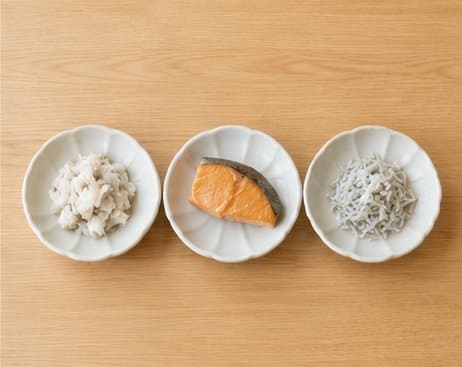
Fish Is Central to Japanese Weaning
In many countries, fish is treated as an advanced or slightly intimidating baby food, often delayed out of allergy fears. In Japan, it is one of the cornerstones of rinyushoku. Fish provides high-quality protein, and oily fish in particular supplies DHA - an omega-3 fatty acid important for brain and eye development during this period of rapid growth.
The Japanese approach introduces fish in a careful order: gentle white fish first, then red-fleshed fish like salmon, then oily blue-backed fish later. Here is how to do it safely.
When to Start, and Why You Need Not Delay for Allergy
White fish is typically introduced in Stage 2 (7-8 months), once your baby is comfortable with tofu.
Fish is a common allergen, but current evidence - reflected in both Japanese practice and guidance from the American Academy of Pediatrics - is that there is no benefit to delaying fish introduction beyond the normal weaning window. In fact, introducing allergenic foods within the weaning period, not after it, is now favoured. Introduce one new fish at a time and watch for any reaction over two to three days, as with any new food. See our allergen introduction guide for the general approach.
The Japanese Order of Introduction
Stage 2 (7-8 months): White Fish
Start with mild, low-fat white fish, which is gentle on digestion:
- Cod (tara) and sea bream (tai) are the classic first fish. Tai carries cultural significance in Japan and appears at celebrations.
- Shirasu (boiled baby sardines) is a Japanese staple - rinse well to remove salt, then mix into okayu. See our Shirasu and Okayu recipe.
Boil a small piece without seasoning, check meticulously for bones, and mash with a little dashi until smooth. Start with around 10g.
Stage 3 (9-11 months): Red-Fleshed Fish
Once white fish is well tolerated, introduce red-fleshed fish, which is richer:
- Salmon (sake) is excellent - it has one of the highest DHA contents of common fish and a very low mercury level, making it a near-ideal baby fish. Use fresh fillet, skinless and boneless. See our Steamed Salmon and Broccoli recipe.
- Continue checking carefully for bones and remove the skin.
Stage 3-4: Oily "Blue-Backed" Fish
Blue-backed oily fish (aozakana) such as sardine, mackerel, and sanma are very rich in DHA but have a stronger flavour and slightly higher fat, so they come a little later:
- Sanma (Pacific saury) can be introduced as in our Sanma no Tsumire-ni recipe, where it is made into gentle fish dumplings - a good way to ensure all bones are removed.
- Introduce these once your baby is eating a range of milder fish comfortably.
Mercury: Which Fish to Limit or Avoid
Some large, long-lived predatory fish accumulate methylmercury, which can affect the developing nervous system. The good news is that the fish most used in Japanese baby food - white fish, salmon, shirasu, sardines - are all low in mercury.
Best low-mercury choices for babies: cod, sea bream, salmon, sardines, shirasu, trout, flounder.
Limit: large tuna (maguro/bigeye) - small amounts only and infrequently.
Avoid for babies and young children: shark, swordfish, king mackerel, marlin, and tilefish, which are highest in mercury.
A practical rule: build your baby's fish meals around the small and medium species traditional in Japanese cooking, and you will naturally stay in the low-mercury range.
Bones, Always
The single most important safety habit with fish is checking for bones - every time, without exception. Even fillets sold as boneless can retain small bones. Run your fingers slowly through the cooked flesh, flake it apart, and look carefully. For oily fish especially, mincing into fish dumplings (tsumire) is a reliable way to be confident no bones remain.
A Note From My Own Experience
My daughter's first fish was a tiny flake of boiled tai, mixed into her okayu, on an ordinary weekday. There was no ceremony to it - but as a Japanese mother, I felt the quiet weight of giving her a food that is so deeply part of how this country eats.
What surprised me was how much she liked the oily fish later on. I had expected the strong flavour of sanma to be a hard sell, but mixed into a soft tsumire with dashi, she ate it eagerly. Fish, introduced gently and early, simply became normal food to her - which is exactly what the Japanese approach intends.
What to Read Next
- Stage 2 Baby Food - The Japanese Approach to 7-8 Month Feeding
- Introducing Allergens to Japanese Babies - Egg, Wheat, Soy and More
- Baby Dashi Guide - Every Type of Japanese Stock for Weaning, by Stage
- Iron-Rich Japanese Baby Foods - Preventing Iron Deficiency During Weaning
Yumi is a registered dietitian (管理栄養士) and certified school nutrition teacher (栄養教諭) with 7.5 years of experience planning school lunches in Japan. She is now a first-time mother navigating rinyushoku with her own daughter, applying everything she has learned - and discovering how different it is when the baby is yours.
Sources:
- Ministry of Health, Labour and Welfare, Japan. Enyuushoku Shien Guide (Weaning Support Guide), 2019
- U.S. FDA / EPA, "Advice About Eating Fish," Best Choices list, 2021
- American Academy of Pediatrics, "Fish and Shellfish," HealthyChildren.org
- Ministry of Health, Labour and Welfare, Japan, advisory on mercury in fish for pregnant women, applied conservatively to infants